
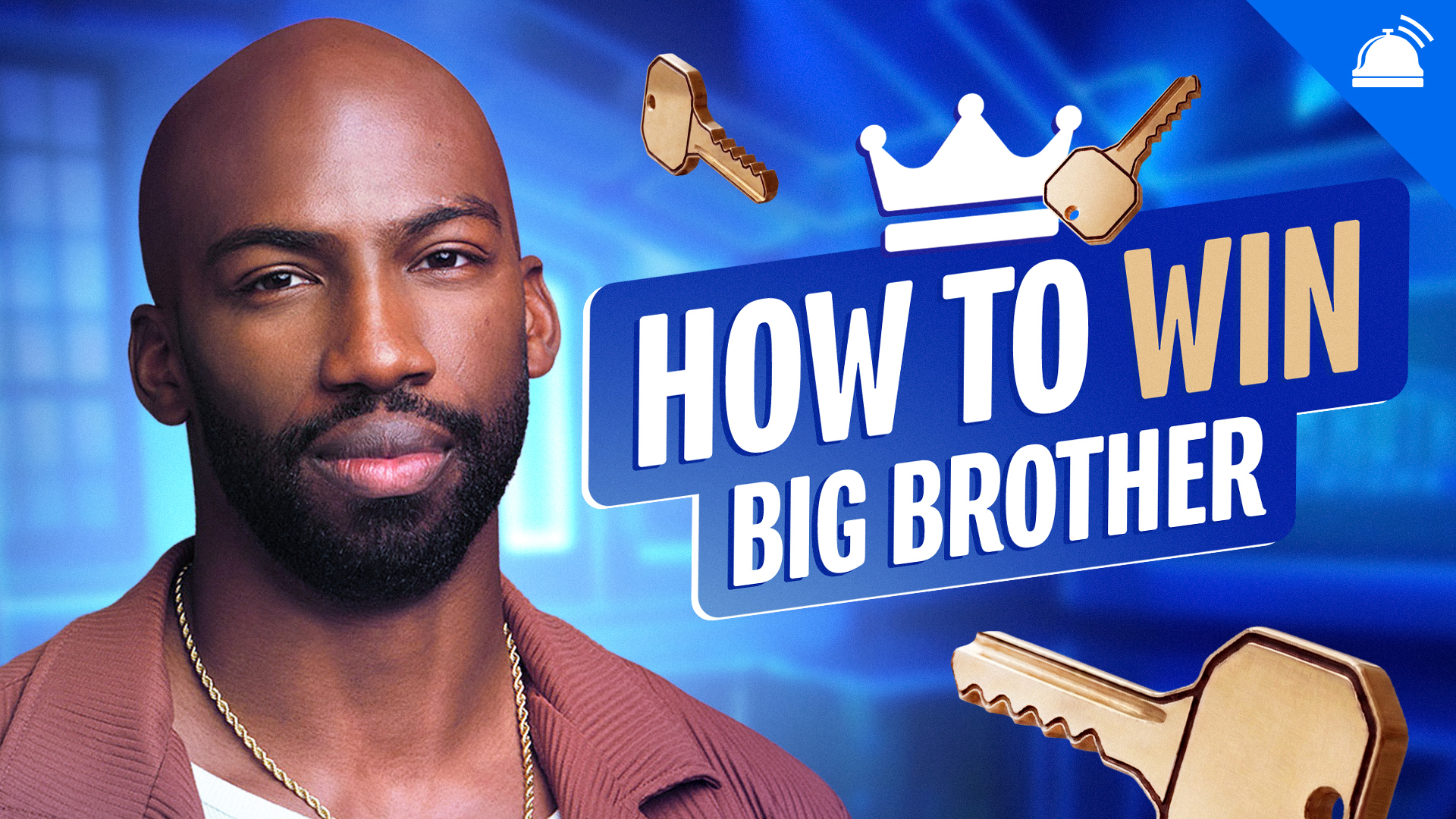
 Xavier’s Blueprint for Winning Big Brother Today, in this special “How to Win Big Brother” episode, host Taran Armstrong welcomes BB23 winner Xavier Prather to break down the art of outsmarting, outplaying, and outlasting in the BB house. As secrets swirl and power shifts, smart players are working overtime to balance competitive fire, social bonds, […]
[00:00:00] I didn't think the pain from the shingles rash would affect simple, everyday tasks like bathing, getting dressed, or even walking around. I was wrong. Though not everyone at risk will develop it, 99% of people over the age of 50 already have the virus that causes shingles, and it could reactivate at any time. I developed it, and the blistering rash lasted for weeks. Don't learn the hard way, like I did. Talk to your doctor or pharmacist today. Sponsored by GSK.
[00:00:30] Summer routines live or die by how easy they are, and honestly, if something takes too much effort, I'm out. That's why Grooms is my go-to. It's my one daily pack of gummies covering my greens, vitamins, and minerals. Plus it has 6 grams of prebiotic fiber, which is more than 2 cups of broccoli. No mixing powders, no giant pills, no hassle. I just rip open the pack and I'm done. They taste good and they make it easy to stay on top of my health, even when life gets busy. Save up to 52% with the code PODCAST at Grooms.co. That's code PODCAST at G-R-U-N-S dot C-O.
[00:01:00] Keep your wellness routine going strong all summer. Cachava's new travel packs help you stick to your daily ritual even when you're on the go. Just one packet of Cachava's all-in-one nutrition shake provides complete nutrition wherever you are, with 25 grams of protein, 6 grams of fiber, greens, adaptogens, and more.
[00:01:19] Simplify your daily ritual. Go to cachava.com and use code FITNESS for 15% off. That's K-A-C-H-A-V-A dot com code FITNESS.
[00:01:45] Hello everyone and welcome back to our Big Brother coverage here at RHAP. I am your host, Taran Armstrong, and I'm back with the preseason series that we're calling How to Win Big Brother. And with me, I have another winner of Big Brother who can hopefully give some advice. It's Xavier. How are you doing, Xavier? I'm doing all right. I'm doing all right. How are you doing?
[00:02:15] I'm doing very well. I'm very excited for Big Brother 28. I think, you know, Big Brother 27 was a rough one, but it was also very entertaining, but it was also very frustrating at times. Yeah. And Xavier, part of that, part of the reason why, I think, is that, and I mentioned this to Chelsea when I talked to her, they were in that house saying,
[00:02:38] yeah, I got cast for this show and I asked ChatGPT how to play. And I figured, Xavier, that we can do better. I, you know, you'd think. Um, ChatGPT, damn AI. I tell you what, people are getting lazy because of AI. Like, it would be different if you didn't have such a glossary of previous seasons at your disposal.
[00:03:03] It was like, all you got to do is get Paramount Plus. And then, like, boom, the whole catalog is there. That's what I did. I went back and watched, like, all the early seasons. I watched seasons that were more recent, compiled them all together, saw players. It was like, okay, I see maybe some similarities there. I can take that from their game and then saw things that I didn't like. It was like, okay, clearly this doesn't work. Let's avoid that forever because that person got sent home immediately.
[00:03:26] Like, you have resources at your disposal that can help you be informed as to how you might want to go about playing the game of Big Brother. So, to use ChatGPT just feels lazy. Just feels lazy. It does. It does. And I think that, listen, I think that's a great first tip here.
[00:03:43] That's, you know, I talk about this a lot. Basically, nearly every winner for the last, like, 15 years plus at this point has had some level of knowledge about the show. Like, a decent amount. Like, they're either a big fan coming in, they're a super fan coming in, or they've at least seen all or most of the seasons.
[00:04:06] Even Taylor, who was probably the least familiar with the show before her when she did her best to study up, certainly would have watched a video like this if it had been available. She watched the deep dive with Tiffany before she played. So, like, knowing what you're doing going in can be so important. And we have seen players even recently who are like, nah, I don't want to watch it. I want to go in fresh. I want to have my own ideas.
[00:04:33] And I can understand where that comes from. Yeah. But when you're competing against people who have 25 years of knowledge backing them, like, it's a little tough. 25 years of material in their back pocket that they can just kind of, oh, this situation is very similar to when, you know, you know, on season 12, they did this. Or like, oh, okay, this competition is very similar to what they just did on season 21.
[00:04:59] Like, I think from a competition standpoint, it can give you a lot of familiarity with the types of competitions you might be exposed to. Like, you're not going to find a lot of these competitions at Dave & Buster's. Although, I will say if you were going to prep from like a competitive standpoint, go to Dave & Buster's. Go to a carnival. Go to any place where you're going to be doing a bunch of kind of miscellaneous competitive things because that's going to be more of what you're going to encounter when you go into the Big Brother house. You're not going to be in there shooting basketballs or throwing footballs or golfing or tennis.
[00:05:29] You're going to be hitting a giant pool ball into a giant shark's mouth. I've never seen that before. I was like, what the hell is this? But we did it on my season. Like, you're going to see things you've never seen before. Better for you to get familiarized with carnival games than you would a sport or anything like that. That actually is great advice as well. I like this because I do often talk about how the competitions are very athletic nowadays in the sense that like there's a lot of running around.
[00:05:59] And, you know, on a season like season 25, when you have like Jag and Matt, who's like a Paralympian competing against, you know, 50 and 60 year old like Serene Felicia. Let's not let's not underrate Felicia. She could have held her own. She was just trying to make sure other people's egos were, you know. Listen. She was just I think that is her being humble, you know, and I appreciate her and love her for that. She she knew what it would do to the egos of those men.
[00:06:28] She was managing her threat level and I can appreciate that strategically. Yeah. So athleticism and you see this a lot. Athletes overwhelmingly win more competitions than non athletes. However, you make a very good point in that a lot of athletic people will go on the show and then find themselves like, wait, why aren't I winning all of the competitions? Because, yeah, it's not there. It's not their sport. It is random silly stuff. Yeah.
[00:06:58] So like where I think. Athletes may to some degree have an advantage. I don't think it's necessarily in the competitions themselves and like what they're doing. It's more so they're used to having to perform under high pressure situations. That's where I think they have a slight advantage or it's just something that's an added tool to their skill set where it's like playing under the lights isn't foreign to them. Now, what they're doing is probably very important to them, but they're naturally competitive people.
[00:07:26] And so I think, you know, the pressure doesn't necessarily get to them as much as it might others. And they just, you know, they're competitive. So they're going to try 110 percent, at least most do. Yeah. I've gone on there and just absolutely. I don't know how family friendly this is. So they've just they've not performed well. I talked to Chelsea about this a little bit.
[00:07:48] I feel like especially in individually timed competitions, when you don't see the other people competing, there are way too many players that will just like walk from one portion of the competition to the other. And it's like what? Hustle. Yeah. It's just just some box. Yeah. No, I just.
[00:08:10] I definitely think that's a that's an element of the competition that can be different to like competing in front of your fellow house gives versus a solo competition where you're just kind of competing on your own. Those are definitely different elements to a different layer of pressure or layer of pressure that's removed when you're competing by yourself. It's it's all it's all interesting. It's all interesting. Yeah. Well, Xavier, one thing I wanted to ask you about here in relation to competitions, obviously, they're very important, especially, I would say.
[00:08:39] And I would assume you agree the end game competitions. Absolutely. But there's always this question of like, do you throw competitions? When do you throw competitions? How many competitions should you throw? And I think it's such a difficult question to answer, probably and primarily because it varies so dramatically depending on who you are, what you're capable of, what your position in the house is and all of that.
[00:09:06] But but but give me some of your your basic thoughts on throwing competitions. If you're going to throw competitions, I think you hit the nail on the head. You got to know yourself and what you're capable of. Like you might think that you can throw competitions and then beast it at the end. But there is also something to maybe like winning a competition or two early just to, you know, give yourself the reassurance. OK, I know how to do it. I've done it before.
[00:09:30] So now I can kind of gauge like, OK, or as you're going through other competitions, like even if you're going to throw it to some degree, you need to kind of see how you can do. Because if you're going to try to flip that switch, but you've never really even tried any of the competitions, I think it's going to be far challenging for you to just turn it on at the end when you have like no real experience trying hard at these competitions. I do think throwing competitions could be beneficial.
[00:09:57] I think to say otherwise would kind of disregard my season a little bit. I definitely think it could be beneficial, but I just think you need to do it at times that are advantageous. And don't make it obvious if you're competing in front of other people. Like some people have very obviously thrown competitions while their house guests are like sitting there. And it's like what you think they don't notice that. And if they do notice it, they're going to have a lot of questions for you. If you can't answer those, you're in trouble. Very good point.
[00:10:26] Not only should you try not to make it obvious, but definitely don't tell people that you're throwing competitions. You got it. If you're telling someone it needs to be like your closest ally that you know is not going to leave. Like if you're telling, I don't know, someone who's on the other side of the house. Yeah, I threw that competition. What the hell? Why would you do that? Don't do that. Yeah. Unless it's like the person you threw it to, because otherwise, and unless you can find another reason that I don't see, what is ever the reason to do it?
[00:10:53] Because if you're telling your ally, all you're telling them is, oh, you're not going to be winning competitions for me. That's annoying. And if you're telling your enemy, oh, then you're like now is a good chance to take you out then because you're more capable than you appear. Yeah. Yeah. And that's where it's, if you're going to reveal it, you, I don't see why you would ever reveal it to an enemy. That doesn't make any sense. Like that's just dumb because it's just, they're just going to, even if you're not as capable as they might think you are, you can't control how good they might think you are.
[00:11:20] So you're ultimately their threat level, your threat level is going to grow exponentially in their eyes because they don't know what you're capable of. But the amount of people I see that will brag about throwing competitions to anybody that will listen is, is too many people, Xavier. I think it only works if like, if you're throwing competitions and then you're able to like win a bunch, it's like, okay, there might've been some truth to it. But like you're throwing competitions and then when you need to like turn it on, you still like suck.
[00:11:50] It's going to be like, oh, okay, gotcha. So you weren't throwing competitions. You were just losing. Now, you know, you're just losing again. That's bullshit. So, uh, theoretically the people listening to some of the people who maybe need to listen to this podcast probably don't know your history.
[00:12:07] Xavier, you were on season, uh, 23 where you were a part of the cookout Alliance, which hopefully at this point, if you're listening to this podcast, you've heard about it and understand, uh, that they were, they are, they are the most dominant, uh, Alliance performance in the history of the show.
[00:12:24] Um, and you had some experience as we were just talking about throwing competitions in a spot where it, it did get a little tricky in terms of like, it was good for your own personal perception game to throw a competition and let somebody else take some power. And it was good for your Alliance as a whole to let other people take some power, but for your personal position, you were kind of like, Ooh, like I might lose a piece here.
[00:13:21] Yeah. Um, and, um, that can definitely be challenging in the sense of like, you know, you won, if you, if you win competitions to some degree, it's something to add to your resume, how much weight it's given. I think depends on the season. Um, there are some seasons where people take competition wins and weigh them very heavily. There's other seasons where, you know, they don't care. They're more focused on, you know, the social or strategy. So it depends on the personnel that's in the game.
[00:13:45] But, um, yeah, for, for us, um, it's tough because, you know, you, you want to win those competitions and if you're a competitive person, there's in your inherent nature, you want to win. But like at the same time, what does winning get you? You know, winning gives you an opportunity to get blood on your hands and sometimes getting blood on your hands. I think a prime example would be, you know, oh boy Vince. Yeah.
[00:14:11] And there were times where he was winning and I was like, dude, you've got a lot of, you've got a lot of hands and a lot of pots. I don't really see how winning this competition is going to benefit you right now. I get your state, but now you've got, it's like, you didn't think about the decisions that you had to make and they had the, was it the blockbuster or what? What was the? Blockbuster, yeah. Yeah. I don't want that back. I really don't. It probably will be. Yeah. It's you actually, I think you're the only winner I'm talking to that hasn't played in the blockbuster. Yeah.
[00:14:41] I've never played in the blockbuster. No advice for a blockbuster here on this one. Nah, nah. I really don't. The only reason I don't want them to bring it back is simply because there's so much like, Big Brother is such a social game. It's a social experiment as its core concept. And that just completely nullifies the social aspect. Like you, it's not gone, but you don't need it as much. You know, I mean, I think that was kind of evident in Keanu.
[00:15:09] He didn't necessarily get along with a lot of people, but every time he went to the blockbuster, he could win and he was fine. And, you know, great. It just reminded me a little bit more of the challenge. Right. Which, I mean, just again, continues to expose how important competitions are in the show, in the game. People who are very good at them are very dangerous. And you might think like, oh, I might not want to take a shot at this person because they're really dangerous. They might strike back.
[00:15:36] But if you don't take the shot on the one time they were available, somebody like Keanu, who had basically been a house target since day one. Like feats came on and people were begging for the guy to be put up on the block. All it took was a couple of times of people not targeting him and he made it all the way to final five. And with a very good chance of just like steamrolling. Who knows if the jury would have voted for him, but like, you know, that is the kind of player you need to be wary of.
[00:16:06] And you can't always spot them right away. Jag is another great example of this where they actually did take the opportunity to admit him. But it still wasn't enough. He then continued to dominate the rest of the competitions and won the whole game. So definitely need to be worried about that. Yeah, being worried about competitive threats. It's not everything, but if you can't beat someone in a competition, you need to weigh that in. Especially for those in-game competitions where the amount of opportunities they're going to have to save themselves, they're plentiful.
[00:16:34] Like every competition, everyone's competing in everything. You usually get at least two competitions each kind of round. So like just keep that in mind. Yeah. And from what I've seen, they tend to get more physical in terms of like, again, running around. If somebody can outrun you or really just outrun you, a lot of them, you're probably going to have a hard time. Like think about Big Brother 27.
[00:17:03] Morgan is competing against like Ashley and Ava in the dice rolling competition. And Morgan's an athlete and they're not. And they're not out of shape by any means. But she crushed them because of just, you know, and it doesn't seem like an overly physical thing. But no, but it's enough. It's enough.
[00:17:24] And like the physicality, like they've done a lot of, I call them like hybrid competitions where they might have a mental element to them, but they also have a serious level of physicality to them as well. Like they kind of have started to do a lot of hybrid competitions where, yeah, there's like a mental element, but there's also a significant physical element to it.
[00:17:44] So like if you're someone who's good at those types of competitions or if you're in a house and it seems like there's someone that's good at those types of competitions, keep that in mind for the end game because they're going to be a problem. Yeah. And when it comes to something hybrid, think about like if you were racing against an athlete in a mile race, how long, how more quickly would they finish than you?
[00:18:08] And then think, okay. And then if I were competing against them in a quiz where we answered five to 10 questions, how much sooner would I answer those questions? Like it's going to be a lot closer on the questions than the right. Exactly. God forbid you have someone who's good at like the physical aspects and then also has a brain. Like that's exactly that's a difficult person to be. So like if you've got someone who's got both of those.
[00:18:34] And to this point, to this point as well, I think the idea of throwing competitions, just one more thing about it. I think that like it is a lot easier for for somebody like Xavier, like look, look at this guy's guns. Like, like, you know, it's helpful for you to throw competitions because you already seem like you'd be really good at them and you need to lower that threat level a little more than some others might. Right. And you probably do have more opportunity to win more in the future.
[00:19:03] Whereas I will often see some people who are they don't often have a lot of opportunity to win competitions. And then when they finally do, they're like, maybe I should throw it. I haven't thrown anything. Like, yeah, it's like if this is really like your one shot, potentially, you probably should take it. Yeah. Yeah. That's that's another aspect of so many layers. But no, like because I didn't get picked for a veto competition on my season for like a while.
[00:19:29] And so it's like that you might just have you might be unlucky in that sense where it's like, OK, you're competing in the HOH every week to throw competitions. But you might not get picked for a veto for some time, either just your name doesn't get drawn or someone doesn't pick you or for whatever the reason is. That means you're only getting like one competition each week. And that's it's tough to really build up a level of confidence in the competitions if you're just throwing all the ones and you're only getting one a week.
[00:19:54] You're not really getting familiarized with with the kind of environment of those competitions. And there is another side to competition threat, meaning people are coming for you and somebody who's people think you'll never win a competition. You're useless. We don't value you in the game. We don't need to bring you in as an ally. We can put you on the block because we're not scared of you. So like winning one or two competitions is way better than having one zero.
[00:20:22] And most of the time for like a social standing, I would agree. And I think if you're someone who like can't win competitions, I would lean into that, like heavily lean into that simply because like that's going to incentivize people to want to take you to the end because then there's like, OK, I'm putting myself in a position to where I can beat somebody. I'll likely beat this person in a competition like that's an at the at the end game. Winning those competitions is the difference between winning the whole show and losing.
[00:20:50] Like I was very I was I won't say very evident, but that was a that was a big kind of, I guess, situation that happened with last season. You know, we were like, OK, Morgan wins. She's going to be in like a really good position to possibly win the game. And if Ashley wins and then she, you know, cuts Morgan or that happens, then like, dang, Ashley's got a great argument here heading into the final, you know, the final two. So that's that's things to just kind of consider when it comes to a competition standpoint.
[00:21:18] And as you're navigating through the game is like at some point, as you get further into the game, you have to beat somebody. There's just not much getting around it unless you're really great socially. And, you know, we've seen people not do it. Kevin Jacobs is a great example. If you don't want to win competitions, go check out BB can Kevin Jacobs. Phenomenal player. Not really known for winning competitions, but absolutely crushed it.
[00:21:41] Yeah, I think what I said with Chelsea was if you're if you when you think about your end game, you need to either make sure that you're the person winning the competitions or the person that is there winning the competitions is somebody that you can influence. Yeah, someone you can influence or someone who's going to bring you like right. Once you get to like that final five, six, four, like the people around you should be all people that you have there, like the people that you want there for various reasons.
[00:22:10] Like, OK, there's this person who I know never going to go against me whatsoever. I know I can beat this person in competition. This person bringing me to final two. Like that's what that that's an ideal scenario. Like that to me is putting yourself in the best position to win, regardless of if anything happens that you didn't expect. Yeah, I mean, let's let's talk about the positioning here, because you had a very favorable end game position.
[00:22:36] Where once you got to the final four, really, like everyone was trying to work with you and bring you to the end and you had to make a tough choice of essentially betraying, you know, one person and then and then another until you got to the end.
[00:22:55] So so when it comes to that, because a lot of people I talked about this a lot with Chelsea, because it's happened a lot with her season and with 27 that people are like betraying their allies and putting them on the block all over the place throughout the season. Which is wild. So stupid. I just don't like it. I'm like, again, the game is social and it's hard to be connecting with someone gets so close to them. And then you put them on the block. Like, what do you think?
[00:23:24] Like, you have to think about what people's reactions are going to be to the things that you're doing. And if you don't like getting negative reactions, you feel like you might handle that. Don't put yourself in a position to be making those decisions. Yeah. But sometimes, as you experienced, once once you get to the end, you do have to make some of those choices. Uh, and, uh, just talk me through. So, uh, just like quick setup.
[00:23:51] You were in the end with your alliance made it all the way to the end. All six of you, which is again, unheard of and dominant. Uh, so don't expect that you'll be able to do that if you're going. Yeah. Um, but, uh, but you got all the way there. You then took out kind of the two, uh, least loyal people to you in particular. Uh, and I wouldn't say you took them out specifically, but like you and your allies took them out.
[00:24:16] Um, and then at the final four, you had Kylan, who, uh, you know, was part of helping take out those people. What was the other big comp threat? You had, uh, Derek, uh, who was, uh, sort of like less of a comp threat and less of a jury threat. Kind of your main ally throughout most of the game. And then you had, uh, Aza who, uh, had kind of like really, you'd had a great relationship with her. Uh, she was more of a comp threat than Derek, but not as much as Kylan.
[00:24:46] Kylan also still pretty loyal to you, but theoretically had a little bit more of a chance as would Kylan of, of beating you in a final two. Although probably none of them did. Uh, so, uh, so walk me through your decision here because you did decide to take out Kylan, the other big comp threat to give you the better chance of just making sure you won those final competitions. But it really pissed off Kylan. Uh, and obviously your management is important too. So yeah, tell me about the end game. He was upset.
[00:25:16] I didn't, I didn't get that. I felt like he was, I think he handled it really well. You know, you never would have. Um, yeah. So I'll be like, I don't know that I could have asked for like a better final four for me. That was kind of my deal. Final four, like Kylan, though he was a competitive threat. He reassured me numerous times. And I think in his confessionals and things like that, he was talking about taking me to the end. So I'm like, even if he beats me, I'm still going to sit there.
[00:25:43] And I know people in jury aren't particularly fond of him, at least from what I've been hearing. So I was like, from a jury management standpoint, I feel like I got him beat there. Um, and then big D and Aza were two players that I feel like throughout the game had never said my name. So from a loyalty standpoint, I was like, I know these guys rock with me tough. That's, that's great to have that reassurance from people at that stage of the game. And then both of them, I felt like I could beat them in competitions.
[00:26:11] Um, and if in the event that like, you know, big D one, would he cut me? I mean, maybe, but I don't know. Would he get the opportunity? I don't know. Um, Aza, if she won, would she cut me? I think it would depend on who else is there. Like if it's between me and big D well, I, after that last couple of weeks, then she definitely would have cut him. But if I think if it was between me and Kylan, she would probably cut Kylan before me.
[00:26:37] So it was like, I, all across the board, I felt like I had people there where like the likelihood of them getting rid of one of the other final four before me was very high. And that was a very, it takes the stress off of you as you're competing in those competitions, because now there's not as much riding on it because you have so much reassurance and all the people around you. Yeah. I remember, I remember at the final four, especially there, it was an interesting dilemma that you were in with the decision that you were making because, um,
[00:27:06] um, we've seen it, we've seen it happen before where like a tight duo will get to the end with a third person who's like really easy to beat. And then the temptation to betray your duo, to take that person gets really high sometimes. Uh, and so like, you know, there's a world where taking out, you know, big D who may be in that position was the least likely to win in a final two could have been advantageous because it would have almost guaranteed that both Aza
[00:27:36] and Kylan are taking you to the end. But by keeping big D in, you're keeping your best chance of winning in the final two because you never really know for sure. Uh, and you're giving yourself better odds of just bringing yourself to the end. Uh, and so you always have to weigh decisions like that in those end game. Yeah. I believe my rationale for wanting to cut Kylan was just competitively. He was more, he was significantly more of a threat than, than Aza or big D.
[00:28:06] Um, and I was like, even if we, even if I have the jury on my side, um, you know, if we're going, you know, back and forth with winning competitions, I think at the end of the season, he would have won more competition than me. And I was like, that, that's could be a substantial argument, especially with maybe some of the other things that he's done in the cookout.
[00:28:24] But then, um, with big D the thing, cause the thing that was really, I guess, kind of unique about our season is that we weren't sure how people were going to perceive the cookout and whether or not they were going to be like, oh, we, we hate you guys for it. Or like, oh, we understand why you guys did it. And that, so that's always something that was going through our head.
[00:28:44] And so as I'm thinking about that with regards to who I want to sit next to, I'm like, I feel like I'd like to sit next to Derek because like, he's probably pissed some people off. Like from a jury management standpoint, I don't think people would look at him and be like, oh, he's not to say he's not a lovely person, but like Aza was beloved by everybody in the house. And so I'm like, if they're pissed about the cookout and they're going just based off of who, you know, they find to be the more lovely person. Aza's more lovely than me. That's an easy vote.
[00:29:13] But if I'm sitting next to big D, I'm like, I feel like it would be far more obvious that they might be a little biased or hurt if that vote didn't go my way. So I was kind of like, I was like, I feel good sitting next to any of them, but I felt the best sitting next to him just based off all the information that I had. So I was like, I cut Kylan because competitively he was the biggest threat. But, and also big D didn't stand a chance in hell at beating Kylan in a competition.
[00:29:43] He might be able to beat Aza in one of the final three. And then if it's just me and big D in part three, that's great. But I have to factor that in. Like if I, if I cut Aza and I bring me Kylan and big D, big D is not going to be Kylan. Then it's me and Kylan duking out in part three. And like, if Kylan beats me, he has the opportunity to cut me at probably the best time to cut me. And so, yeah, I had to, I was factoring that in too. I was like, I want to put big D in a position to where he might be able to win a competition.
[00:30:11] And I like Aza better against Aza than I do like Aza against Kylan. Yeah. Speaking of jury management, yours was very good, obviously. I think, I think you were probably, I mean, really, even once you hit final, I mean, you versus Tiffany in a final two would have been, I guess, interesting. I'm not, I don't remember the details enough to know for sure who would have won that, but it certainly would have been competitive. But you were, you were in a position in the end game where you basically were going to beat
[00:30:40] most people that you sat next to. And that's, I would say pretty rare generally. And especially in this position where you were at, where it's like, you know, the thing about big brother, as opposed to something like survivor, survivor, the jury attends those tribal councils. They've been in the jury for like 10 days. Big brother, you vote somebody out on day like 40 something. Yeah.
[00:31:09] They disappear for like 50 days and then come back and you're like, hey, vote for me to win. And so like, there's so much unknown about like what has transpired. And in your spot, there were so many secrets they were learning in the jury. So you had no idea how they were going to react to those secrets. It's how do you jury manage when people are gone and, and changing as human beings?
[00:31:38] I think that's where like you, one, how did you connect with people in the game? Like were you connecting with them only on a game level? Were you able to connect with them at all on a personal level? When game decisions had to be made, were you making things personal? Like were you, were you trying to insult or berate or belittle people when you didn't need to? At least to their face. Things like that. Like, what were you doing? I think at the end of the day,
[00:32:07] like people have to want to vote for you. And if you made them feel good about you, or they don't feel like you did anything to like disrespect them or anything like that. And then as people are coming into the jury, they're also not bringing in like, Oh, Xavier was such an asshole and he did this and that, or Oh, Xavier, such a bad dad for this and that. Like the only person that would have had an opportunity to do that was Kylan. But at the time that I took him out, I also knew that he wasn't going to have much time in jury. I was like, by the time he's getting cut,
[00:32:36] it's not like he's going to be able to go into jury and like besmirch my name amongst the jurors. He's getting like a day or two with them. So I, at that point it's like, and most of them didn't like him. So I was like, well, actually just started to drop, but this is actually a very good technical point for somebody that doesn't know the, how this works most of the time, but you send most people to the jury. They go to the jury house and they're not like technically supposed to talk about game, but like they can hang out in the jury house and talk about whatever they
[00:33:05] want for the most part. Uh, and then they go to the jury round table where they officially discuss everything. Um, and that's usually hosted by somebody, uh, and is technically where like decisions will kind of lock in. The person evicted at final four goes straight to the round table. They don't go to the jury house and hang out most of the time. It's not always true. Most of the time. And so they'll do the jury round table and then they often are sequestered
[00:33:35] individually up to the finale. So that person at final four, they can come in at jury round table like hot. Uh, but that's the only chance they really have. And then the person at final three basically gets no interaction with the jury. They're going straight into it. Yeah. So that's something that I also kept in mind was like, even if I, like, I don't, I wasn't, I was kind of excited to betray, but like, I was like, even if I betray him, he's not going to have time to go back to the jury house and really like
[00:34:05] taint my name or my reputation with the other jurors. Like he's going to have the round table and then that's pretty much it. So it's like, it's kind of a great shot. And then, and then with the final three, again, you're not getting time to go back and say all these terrible things about me to, to ruin my, my reputation, my image in the jury. You're really going out there. You're sitting down at finale night and then you got to think of a question to ask. So you're, you got a lot going on. So from logistical standpoint, use, use things that are happening in the game to like your favor, like keep those things in mind. Like, Hey,
[00:34:34] wherever I vote out at final four, they might be salty with me, but they're not really going to have time to influence the jury. Like I need to, the purple who go to the jury early on, those are the people you want to make sure you have great relationships with and good, good relationships. I think Ashley is a great example of that. I think Ashley had people in the jury who were probably the best advocates she could have had. And they were in the jury for a while where they were able to influence some of the thoughts or may have been able to influence some of the other jurors while they were in there.
[00:35:04] And that's who's in the jury matters a hundred percent. How you treat the jury members matters and who's in the jury. Absolutely matters. Yeah. I'll, I'll talk to, we'll, we'll hopefully get a chance to talk to Ashley and we'll get a firsthand sort of note on how to do that. But yes, I agree. I think that from what I've seen, one of the most effective tactics for jury management is if you are fortunate enough to be in a position where you have an ally that's being sent home and
[00:35:34] they're not mad at you about it, you can basically send them in on a mission. You can give them like marching orders, you know, don't, don't be like, like weird about it, but like you can be like, Hey, here's what I plan to talk about. If I make it to the end, like, you know, make these campaign points for me. Um, because if they're planting seeds that you can then kind of like come out on for now, like if they're like, well, you know, uh, Ashley played a good game,
[00:36:02] but does she realize what she was doing? Uh, like you can plant that question so that you can have the answer. Like I know exactly what I was doing with this, this, and this. So like, there's some cool stuff you can do with that. And the, the biggest thing that I think if you're going into the game, you should keep in mind that like, what's like your perception in the game is going to be reality. Like there's going to be things that you come out and realize after the fact, like, Oh, this person was doing this or, Oh,
[00:36:31] this person was doing that. There are things that the audience is going to know that the house guests won't know, but there's going to be a general perception of what's happening in the game in the house. And that is the reality. Like that's going to be what is used. For the people voting at the end, because they're not getting feeds from anything that's happening that the outside world is seeing. So like figure out what's, what's the perception of what's happening in the house, because that can help, you know how you might want to navigate or who you want to be sitting next to like a beer.
[00:37:00] You don't know what's going on and what people's perception are is in the game. And you sit next to someone that everyone perceives is like the goat. It's like, why would you take that person to the end? You shouldn't do that. You should absolutely cut them. Um, but I do know there are situations where people get to the end and they're like, all right, friendship over money. And I'm like, I can appreciate that. If you knew this person before the show. Um, yeah. I mean, there are people, if you take your friend over the person you, you can be,
[00:37:29] there are jurors that might vote against you just for doing that. Uh, like that has happened before. Oh yeah. A hundred percent. But like, that's yeah. You've got to know who's in your jury and like, think about things that might appeal to them. Like, like part of the reason why I also wanted to cut Kylan's because I knew Brittany couldn't stay in Kylan. And I was like, if I send Kylan, like Brittany might be upset with me. Um, just, just because I ended up putting her on the block. Um, when I was in power, I was like, but if I send her the person who was in power,
[00:37:59] when she got sent home, here you go. And I know SB wasn't right. I was like, there's many people that don't like, aren't, he's not in favor with. So if I send them this gift, I'm like, Hey, here you go. Just keep that in mind. When it comes time to give somebody a bunch of money and just don't say I never did nothing for you. That was kind of, you know, there's things that you got to try to butter people up. It's, it's social. It's political. Yeah.
[00:38:29] So you talked about perceptions, reality, know what the perception is. So like really the more information you have, the better, like the more you can see what other people are seeing, where people are, are coming from, where their loyalties are, the more information you have, the better. Something we talked about, uh, Chelsea and I talked about was like, when you're in power, make sure you're using that power to gain as much information as you can while you have that power, because it's a great opportunity to, um,
[00:38:58] and the inverse of that is that is don't give away all of your information for free. Uh, and Xavier, you, again, we're on a season where there was a secret Alliance, the cookout that stayed secret all the way to the end. Um, but even beyond that, I think you were a player that did very well with managing information and secrets within your Alliance. You had your own sort of groups and relationships. Uh,
[00:39:25] you maintained relationships outside of the Alliance where you kept the Alliance a secret from them. Uh, so secret, secret, secretiveness, secrets are secrets, secret keeping huge part of big brother from, from very, very early on. Famously, Jason and Danielle had the secret Alliance back in season three dominated that game. Uh, keep things secret. Xavier, how do you manage to keep things here?
[00:39:53] Cause a lot of people go in and they realize they should keep something secret and they, they can't manage it. It's funny to me cause it's, it's not hard to keep your mouth shut. Like you work more muscles to talk than you do to just shut the hell up. So like, it's, it's surprising to me that like people, as often said, mouth closed, eyes open. Yeah. Mouth closed, eyes open, keep your ears. I point them out. Like it's, it's not hard to not talk. Um, but I find that people just get compelled to,
[00:40:22] to share when they don't have to. For me, it like confidentiality is part of my daily life. So it's not hard for me to keep my mouth shut. And I just, I don't, I'm not a snitch. I wasn't raised to be a snitch. I don't tell people's business. It's like, I don't, I don't need to tell everybody's business. You know, you told me that. Interesting. What are you going to do with that? Not a damn thing. That's like, and if you're disclosing information, you got to know where the game of telephone is going to go.
[00:40:52] Like if you're telling something to someone, you should have a general idea of who else that might go to, because that's going to be very important. If you're just telling someone something and thinking that you can just trust them, but not keeping in mind any allegiances, they might have other people. And you can get an idea of who people are working with. They hang out with each other, like, except for the cookout, like they hang out with each other. They hang around each other. Like it's not hard to see certain things. But yeah, I don't know.
[00:41:20] The confidentiality or secrecy to me is one of the easiest aspects of the game. And I also think when it comes to divulging information, this is probably the lawyer to me, but like you can give an answer that's answering someone's question without divulging too much. Like you can answer their question and not, well, one, you can answer a question and not divulge too much and not seem like you're beating around the bush. I always call it like selective honesty. Like, okay, what,
[00:41:49] what did you ask me? Okay. Is there a way for me to answer this without divulging too much? Okay. If there is, let me answer that. And then when you're trying to, you know, actually that's more negotiation as opposed to secrecy, but yeah, from the secrecy standpoint, selective honesty is good. I think selective honesty helps build relationships in the game. Because if you're just telling people, people are coming to you with information, you're just, I don't know. I don't know. No one's ever going to trust you because they're just like,
[00:42:17] where does his allegiance actually lie? Like at some point you've got to be honest with somebody, but you don't have to overshare. You've got to give them something at some point so that way they can feel like, okay, he's actually giving me something that I can use. It's a very good point. I think, and I think that is where people find the difficulty in keeping it in secret. It's like Felicia herself, a tactic that she often used was just like, she'd go up to someone and just point blank, ask them like, you trying to flip the vote?
[00:42:48] Yeah. And it was so unprepared. Like they didn't have a lie prepared. They just, I love it. Yeah. Yeah. Yeah. Like it's, I think a practice skill to be able to, to answer questions without divulging the information that you shouldn't be divulging. Yeah. I won't act like it's something that's simple to do. It's a, it's definitely a skill that, that you got to kind of hone in and be really intentional about. Again, I,
[00:43:16] I credit my background is kind of giving me a little more experience with having to do such things, but yeah, I selective honesty, I think can be key because you need, people need to feel like, you know, there's a bit of a give and take. There's a quick pro quo. There's always just them giving you stuff and you not giving ever, ever giving a nugget back at some point, that's going to come back on you. But if you can give them little nuggets here and there to show that, Hey, I'm giving you something too. That'll help the, your relationship with whatever house gets,
[00:43:46] not feel so transactional. And they're going to be more willing to give you more information in the future that trust is going to build. And then you can use that building relationship to your advantage. Yeah. Yeah. Maybe think of it like, what are the most important pieces of information about me that I need to keep secret and like, just layer them out. Like this would be the most damaging potentially if it got out, this would be the, you know, this is the least most damaging. And then just make sure you're keeping the important stuff behind that
[00:44:14] barrier and let kind of let some of the other stuff go. One thing I never quite understood is if like people were going to keep a secret about like their profession or, you know, maybe they're a famous person's child or something like that. And then like, they divulge it halfway through. I'm just like, why they were never, they, you don't have Google. Like they were never going to know that to me is the easiest secret to keep because it's just like, just don't, you don't have to talk about it. People are asking what you do. It's like, we're in a house. I don't know. I don't know if I do, I do other things, but yeah,
[00:44:44] like if you're going to keep a secret about your profession, don't divulge that to anybody. Like divulge it at finale night outside of that. Don't divulge it because one, you don't know how the people you tell that are going to receive it. Like some people have received it really well and kept the secret as well. Other people, some media reason to get rid of you because now they don't trust you. So like, if you're going to keep a secret about what you do, keep it till the end. There's no point in divulging it. I just see it. There's too much risk associated with potentially divulging. Even if you got a showman,
[00:45:15] y'all work it out afterwards. It'll be fine. Um, yeah, I think some people do use it as like a hail Mary. I remember like, uh, Corey, um, in season 25, uh, divulging as sort of a hail Mary, like, Oh, my brother was actually on survivor. Um, and which was funny because nobody ended up caring. Um, but like, uh, you can, you can use secrets as, uh,
[00:45:45] famous, um, yeah. Famously Vanessa Russo in season 17. Uh, I talk about this all the time cause I love this move, but, uh, Dave Vaughn in that season managed to suss out the fact that there were secretly twins playing in the game, switching out. Dave Vaughn, unfortunately for her, did not use this secret to her advantage. She just kind of told everyone Vanessa heard it and went, Oh, I can use this. She went straight to Julia at the time,
[00:46:15] uh, and said, Hey, everyone thinks you're a twin, but don't worry. I'm here to protect you. Uh, and used that secret selectively as a tool of like, Hey, like let's, let's do this. Let's work together, uh, to win over Julia and then told select other people about like, let's tell Austin about it. Let's tell Steve about it. Uh, and let's tell, yeah, you know, Clay and, and, and, uh, I forget her name. Uh, you know, you're the boy,
[00:46:45] uh, Shelly. Thank you. Let's tell them about it and then propose like, Hey, this is useful to us. We are the only people who know for sure that she's been open with. She'll be loyal to us. We'll bring her to the, to the midpoint when her twin comes in and joins us. And now we have a two for one. Uh, and it was a really cool way of using secrets, uh, actively to build relationships and alliances. So, and Jared did a similar thing with Izzy on that season where Izzy was like, I know exactly who you are. It's like, Oh no,
[00:47:15] it's over. It's over for y'all. Izzy about to get rid of all of you. But then they end up forming probably one of the strongest, like, ally ships in the game and, and allowing Izzy to kind of be a part of the fold. Um, so yeah, it's, if you let someone know you, you pretty much are deciding that you, you got to work with that person. But in my opinion, you can keep a secret. If you're coming in the game with a secret, die with a lie.
[00:47:44] One of the most valuable things you can have in the game is an ally, a really tight ally that nobody knows is really tight with you because there's so much information that they can gather that you would otherwise be not be privy to. Uh, there's so much that they can do to help influence perception when they're not connected to you. There's so much that you can do as the cookout, uh, displayed. If they are not the person that gets put up on the block next to you, anytime somebody is trying to target you, um,
[00:48:15] the difficulty is, and maybe this is a great, uh, sort of final point to, to, to ask you about, um, is when you are, when you have a secret relationship, it can be difficult to maintain that relationship. Uh, and, and maintain that loyalty. Talking about Corey in season 25, he tried to do this with, uh, with Mimi on that season and thought that he had this cool under the radar relationship with her, uh, uh,
[00:48:43] only to discover that she was, she just didn't F with him. Like months into the season, like, Oh, cause they never actually spent that time because they were keeping it a secret. Uh, so you obviously, and again, the circumstances were maybe a little bit different, but like you definitely were in that position a lot of like having to maintain these secret connections without actually spending time with people. Yeah. Um, as far as like keeping people off of your scent, I will say public squabbles,
[00:49:13] public, um, conflicts definitely help. Like, like even you don't like, even if you were to manufacture it, you one don't make it feel manufactured, but if you can get like in some type of public squabble with someone that you're working close with, no one's going to assume you two are working together. That's part of why the cookout work. Like everyone was at each other's throats, like, like publicly, like half the time. So it was like, there's no way these guys are working together. They all hate each other. It's like, Oh,
[00:49:43] it made things so stressful for me and Hannah. Um, but yeah. So like, if you are working closely with someone, you're trying to keep people off your scent, maybe dive, you know, develop some type of public squabble, some type of public conflict that would make it highly improbable or illogical for people to assume that you'd be working with that person. And then as far as how to navigate, you know, the secrecy of that, um, working relationship, you guys just have to find times when you have like, you know,
[00:50:12] just yourselves. And then in those moments, you got to be very efficient. Like, Hey, bang, bang, boom. All right. You go that way. I go that way. Like that's, that was part of why the cookout worked really well. When we were sharing information, we were brief, we were concise, we were efficient. And then we were out the damn room. Like, don't, don't like ever. I remember there was a time where Tiff, Kyla and I were sitting in the kitchen, I believe. And we're talking as everyone else is outside. And then we're noticing like, okay, we've been sitting here talking for like three minutes. That's, that's time too long.
[00:50:42] And I can also tell Tiff and Kyla, Kyla was starting to get on tips. So I was like, Hey, Kyla, why don't you go out there? We shouldn't all be around just to make sure that they, no one could ever say that they saw us all together, kind of congregating, talking about whatever, like brevity, efficiency, conciseness, clear kind of game plan, clear instructions, and then go on about your business. But yeah, take advantage of those brief moments and then disperse. How do you, how do you tell? Because we saw Keanu do,
[00:51:12] uh, tried to have some of those relations as well throughout his season. Uh, one of them was with, of course, Vince. One of them was with Riley where like, he thought, Keanu thought that him and Riley were like, right. It does. So tight. He was talking about Riley taking out his showmance at some point. Riley would be like, yeah, I guess. Uh, and so like, you know, for Keanu, it should have been obvious, but sometimes it's not. and you know,
[00:51:40] Vince was maybe a little bit better at convincing Keanu. Like, yeah, I'm really with you. Uh, how do you tell if you have that kind of relationship that it actually is real and you're not just getting sure? Yeah. Yeah. I think one, you can kind of tell to me in the amount of information, the level of the information that you guys are kind of sharing. Like if someone's being, as you just said, Riley was kind of like, yeah, I don't, I don't really know. And I was like, yeah, like I had an experience on a later show where it was again,
[00:52:10] kind of social in nature. And, um, this was a show where you literally, you can't really talk about, it was two part. Oh, it was fucking tough. Um, there was a guy in there who was easily my number one ally. And I could just, you, you can kind of get a feel for people. Like there are other people that I'm like, yeah, you're a gamer. You're a gamer. I know. Like, uh, I don't really know, but this guy, I was like, he's a hundred percent who he says he is. And to be frank, if you can get a really close ally,
[00:52:38] that is sounds harsh, but like easily manipulated, you're going to kind of, I would, I would pick that person for a close ally because you, you know what you're getting with them. Or if you have someone who has a very kind of strong personality, pick them because you know what you're going to get with them. If you have someone is huge. Yeah. Predictability is, is significant in choosing an ally. Like if you have someone who is more of like a social chameleon, that's going to be tough to actually read,
[00:53:08] you know, where they are, unless they're giving you sufficient information to where you can kind of be like, I know this person genuinely touched me, but if you have someone that's just kind of like a, trying to think of an example, Oh, um, chicken, George, um, Don, Donnie Thompson, what you see with those guys is, is a hundred percent what you're going to get. So you can know exactly the kind of, not that they're easily manipulated, manipulated, but you just know what you're going to get. Whereas someone like, uh, you know, anyone in the cookout, uh, Vanessa Ruth though,
[00:53:39] um, Chelsea, Dan, like you, you might not know, as much, and that's going to be more challenging. So if you can pick at someone as a number one ally, pick someone that where, you know, what you're going to get and you can kind of tell them their personality. Yeah. Like for, I, and maybe Vince is maybe a good point to a good person to look at with this, where it's like, if you've, if you've, if you realize that this person has a lot of people or even just another person who considers them to be their number one ally. Yeah. You,
[00:54:08] you cannot just assume that you're the real one. Yeah. And see other ones are the fake ones. Like it's, it's, they're clearly very good at convincing people that they are your number one ally. Yeah. Vince, that's an underrated, I think, kind of point for Vince that, that I think people appreciated. I think he was really good at getting people to buy in that. He was like all in on them. I just don't, if he had been able to manage that a little bit better, I think Vince would have gone down as like one of them once.
[00:54:38] It was just the managing all of it. I think on a different season, he might've been able to manage it a bunch, a lot easier. That blockbuster really was blowing things up for him. Like I do at one point he nominated. It wasn't like four of his allies. I was like, Oh, nobody forced him to nominate his allies. I know. I know. Sorry. Sorry. Flashbacks. I was just like, buddy, this is tough. He's, he's such a kind guy. He's got a good heart. He's really good. But yeah, I was feeling for him in that house.
[00:55:07] And I remember talking to him afterwards and just being like, buddy, you had your hands in too many pots and too much. You had too much power for too many hands in pots. It's just like, I know. You gave it your best shot. You made it to final two. That's not many people. You can say that. Don't, don't, don't feel sad about it, man. You gave me your best shot. But yeah, like, um, some people you can just kind of tell authentically who they are. And if you can tell who they are, like, that's good. Cause that means, you know what you're going to get from them.
[00:55:37] There's someone that you're kind of questioning to a certain degree. That's probably not someone you're going to want to divulge all your information. Yeah. All right. Xavier, anything else, any like last minute tips, anything you were thinking of that you might, uh, remember, remember these people are like asking chat GPT right now. Uh, Xavier didn't tell me enough at chat GPT. What else? No. So do your homework, go back and watch previous seasons that,
[00:56:07] I mean, that's the best kind of source you're going to get for how to play the game of big brother. Um, I know I did that. Um, I believe Chelsea's was a big long time fan. So she watched a lot of seasons. Um, and then, um, if you can read up on, you know, manipulation tactics, social manipulation, social power, there are books on that book that I always recommend is seven, the seven laws of power. Um, um, I think it's a very good book on, you know, manipulation, power, things like that.
[00:56:36] And a lot of the tools that I, a lot of things that I learned in that book I used in the big brother house. Um, because he, he provides examples of how different leaders in history use certain tactics in order to get other people to do the things that they want. Like sometimes you got to sit back and let someone else think they're in charge while you're actually pulling the strings. Sometimes you have to be more forward and be more assertive to make other people kind of bend to your will. It just depends on the circumstances. Um,
[00:57:04] figure out the kind of house guests you want to be. Like to me, the show is entertaining for two reasons. It's either entertaining for the mess or it's entertaining for the gameplay. Um, figure out which one you want to be and lean into it heavily. Like if you're trying to be a really good game player, then lean into that. Do, do the things that you know you're supposed to do, do your homework. If you're going to be, you know, really just kind of trying to go on the show just to have a fun experience and be messy, man, lean the hell into that. If you, if you go watch my season,
[00:57:34] do everything, the opposite of me, like anything you saw me do, do the exact opposite. Um, well, here's the thing too. You like the best way to be messy is to play really hard. I think that's like, I think people don't realize that. Yeah, exactly. So yeah, like if, if you're, if your goal one, everyone should know winning the show is, is very hard. It takes some skill. It takes quite a bit of luck and it takes, you know, just really things going your way. Um, sometimes they do,
[00:58:04] sometimes they don't. And when they don't, that's when, you know, you can use your skills to maybe pick back up. But when they do ride that wave, um, but yeah, figure out, figure out the kind of player you want to be. If you're there to be messy, then damn it. I better see you be messy. I better see you playing hard. I better see you doing things that don't make sense. Cause that to me, that was Tucker in a nutshell. Tucker's like, I don't know if I'm going to win, but like, screw it. I'm going to have fun. But then if you're there to be a good game player, that's great. Just also know you're going to go the messy route. Most,
[00:58:34] the most entertaining players, rarely everyone. So if you're actually going there to get a check, probably going to want to be more on the gameplay side. Yeah. Uh, all right. Well, Xavier, thank you so much for, for joining us here. Well, where can people find you if they want to hear, hear more from you? See, I'm off the grid. I'm just, I'm in the cut. I'm not in my business. I'm incognito. Um, I think you could just find me on my socials. I'm at Xavier, you're a great thing. Um, that's,
[00:59:02] that's my handle on pretty much any social media site, YouTube, everything. Um, you know, but these days I'm mostly kind of talking about law and stuff. I really haven't talked about, um, the reality TV much. This is probably the first reality TV interview I've done quite some time. Um, I hope you had some fun. I can't remember. It was the last time I did a rap show. It's been a while. I talked to Rob recently. Um, just Rob. I love seeing Rob going and doing like parade magazine interviews. Yeah.
[00:59:32] This is fantastic. I'd never, would not have had that on my bingo card at all, but I love that for Rob. Good man. I was saying, I was saying like traitors is like the gateway drug for old reality stars to get back into the game. Boston, Rob, um, who else is, who else has gone crazy with it? Danielle went in there and did big brother. Yeah. Like everyone's, everyone's doing their thing and I love it. I love it. I can't wait to see what's happening with the next celebrity season. I think it's going to be great.
[01:00:02] Yeah. Um, I also did write a book about big brother. Uh, it's called behind the mirror. Yes. It will not teach you how to play, but it will teach you more of the history of the show, which is always nice and useful. Um, so you can try to check that and maybe grab the audio book before you go on. I don't know. Okay. I get it. You're trying to seduce people with the voice. I like that. I like that. Yeah. Go ahead. Plug it in. You become a voice actor, do a voice acting. That's what the money is.
[01:00:34] That's what the money is, brother. Tell you what, learn something back in my time on big brother. Oh boy. Uh, all right. Well, thank you all so much for joining us. I hope you, uh, found this, uh, useful and entertaining and, uh, we'll see all of you next time. See you guys later. Bye. Bye. Bye.